Article: Craftsmanship, from vine to glass
Craftsmanship, from vine to glass
A bottle of wine looks simple: glass, cork, label. Behind it is a year of work, and often several generations of knowledge. Some of the decisions are made at the vine, some in the cellar, and a few only at the moment of pouring.
We think of it as a chain. Each link is someone's craft, and the wine in your glass is only as good as the weakest link.
In the vineyard
It starts long before harvest. The grower decides how hard to prune in winter, how many bunches each vine should carry, and which leaves to pull so the grapes get light without burning. A vine left to crop heavily makes a lot of dilute wine. One held back makes less wine, with more to say.
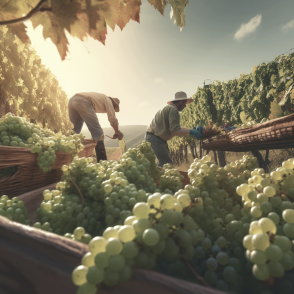
Then comes the call that defines the vintage: when to pick. A few days early keeps freshness and acidity. A few days late brings riper fruit, more body and more alcohol. There's no formula. The grower walks the rows, tastes the grapes and decides. In many of the best vineyards, the fruit is still picked by hand, bunch by bunch.
In the cellar
The winemaker takes over from there. Fermentation temperature shapes the aromas: cool and slow for a fragrant white, warmer for a red that needs to draw out colour and tannin. Then come the choices of vessel (steel, concrete, old oak or new), how long the wine rests on its lees, whether to blend and in what proportions.
Most of these decisions are made by tasting, again and again, over months. And the winemaker tastes at cellar temperature, cool and steady. That's the temperature the wine is shaped for.
At the table
The last link is the only one that's ours. After all that work, the wine is opened in a warm room or pulled from a cold fridge, and poured at whatever temperature it happens to be.
It's the easiest link to overlook, and it matters more than it seems. The same wine at 8 °C and at 20 °C can taste like two different bottles: one closed and sharp, the other soft and heavy. Somewhere between them is the version the winemaker meant.
Our part of the craft
GRAD was founded in 2015 to improve the way people enjoy wine, and that last link is where we work. The GRAD No.1 is designed in Scandinavia and made in Sweden and Denmark. It's a steel body around an aluminium cooling chamber, with a solid-state thermoelectric system that holds a bottle at a temperature you choose, from 5 to 20 °C.
We brought to it the same care we admire in the vineyard: a narrow, specific goal, pursued properly. Here the goal is serving each wine the way it was made to be tasted, from the first glass to the last.
This is the first of three short pieces on the chain behind a bottle. Read on: The winemaker's expertise and Soil and climate.