Article: Red wine and the myth of room temperature
Red wine and the myth of room temperature
"Serve red wine at room temperature" is one of the most repeated pieces of wine advice, and one of the least accurate today. It isn't wrong so much as out of date.
Where the rule came from
The advice comes from a time when rooms were a lot cooler: stone houses, open fires, no central heating. In those rooms a bottle brought up from the cellar would settle somewhere in the mid-teens. That's the temperature "room temperature" meant, and it happens to be exactly right for a structured red.
A modern home usually sits at 20–22 °C, and the rule stayed the same while our rooms warmed up. A red served there is five or more degrees warmer than it was ever intended to be.
What too warm does to a red
At 20 °C and above, alcohol becomes much more noticeable. It carries the aroma off too quickly and sits heavily on the palate, so the wine feels hot. The fruit turns soft and jammy, and the structure (acidity, tannin, freshness) fades behind it.
It happens most easily with light reds. A Pinot Noir or a Beaujolais served warm can taste flat and sweet, and it's easy to blame the bottle when the problem is the temperature.
The two bands for red
Light reds, 12–14 °C. Pinot Noir, Gamay, Frappato, and most reds that are pale in the glass and fragrant on the nose. They want a real chill: cool enough that the red fruit stays bright and the fine tannin stays silky.
Structured reds, 14–16 °C. Barolo, Brunello, Bordeaux, Cabernet Sauvignon, Nebbiolo, Aglianico. Tannin is why these wines sit at the warmest end. Too cold, the tannin tastes hard and bitter; at 14–16 °C it softens and the wine opens in layers. That's still well below a modern room.
How to get there
From a room at 20–22 °C:
- A light red needs about 30 minutes in the fridge.
- A structured red needs 15–20 minutes.
If a red has come straight from a cellar or wine fridge, it may already be right. Give it a few minutes in the glass and taste as it opens.
Keeping it there
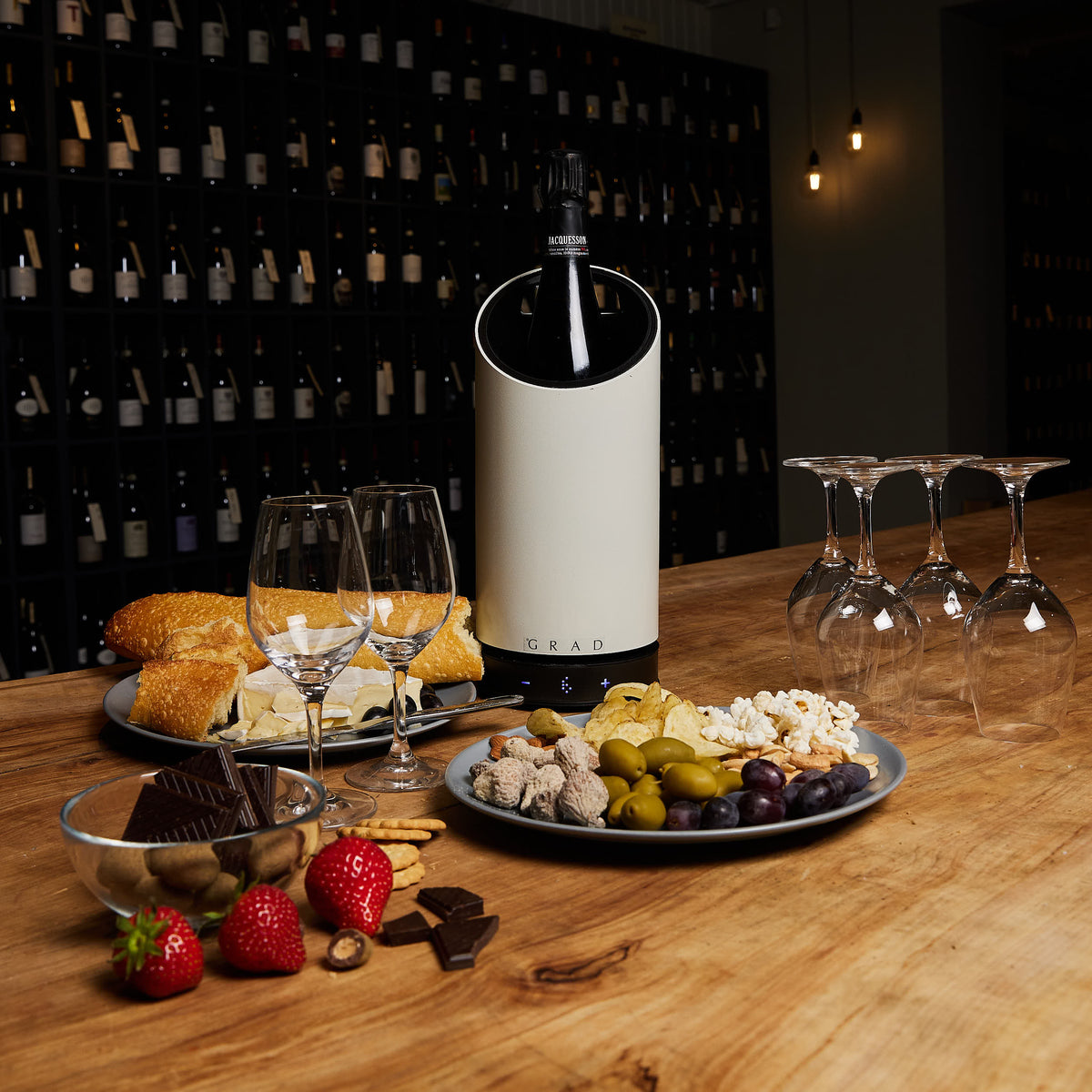
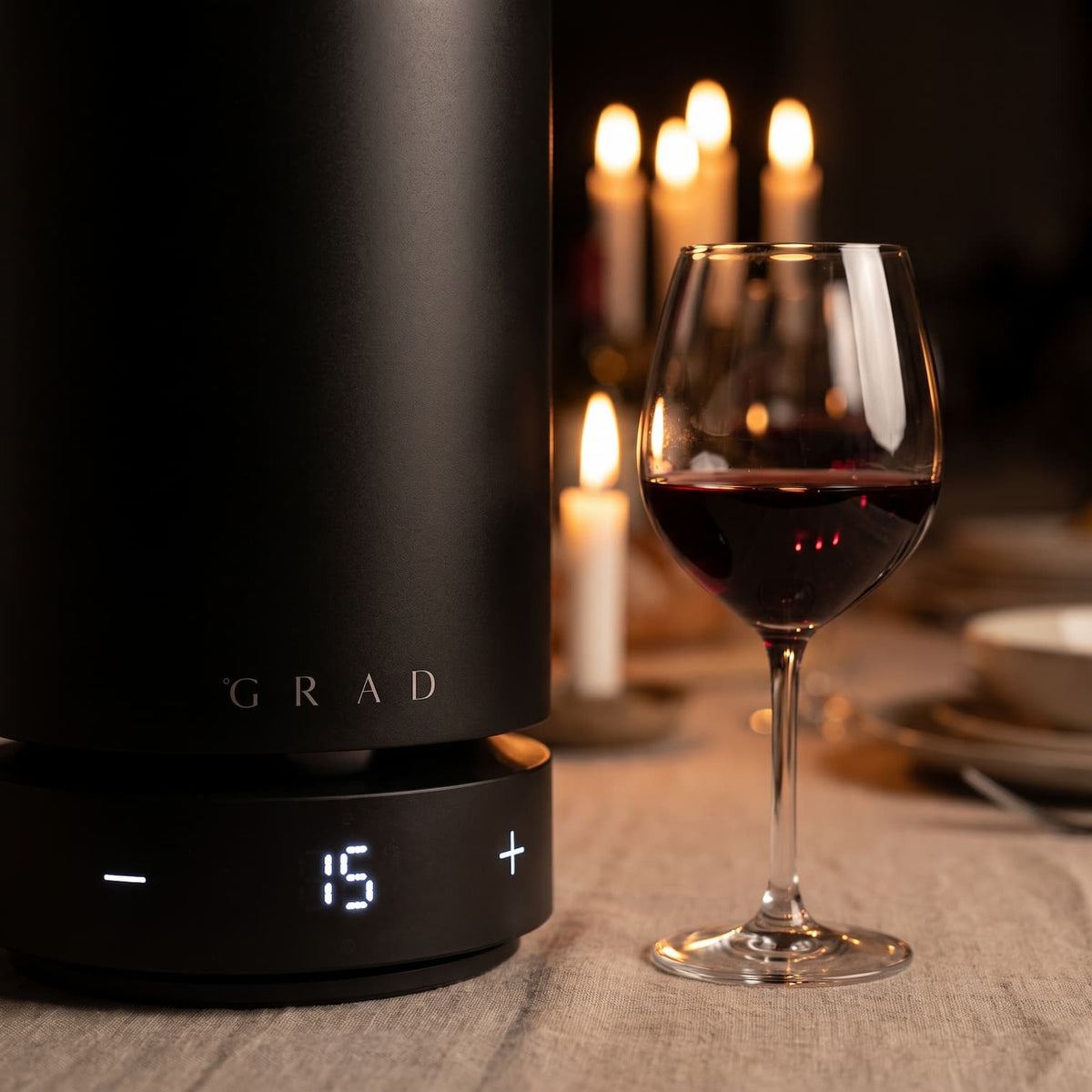
A chilled red on a warm table climbs back toward room temperature within the hour, and the glass gets there faster. We designed the GRAD No.1 for exactly that. Set it to 13 °C for a Pinot Noir or 15 °C for a Barolo, put in the bottle already at temperature, and it holds that number while you drink.
Try it once
Next time you open a light red, put it in the fridge for half an hour first. Taste a glass, then leave a second glass out for twenty minutes and taste again. Most people only need to compare the two once.