Article: The serving temperature guide
The serving temperature guide
This is our reference page, the one to come back to. Every style of wine has a band where it shows best. Below are the six we use, the wines that belong in each, and how to get a bottle there.
At a glance
| Style | °C | °F | Typical wines |
|---|---|---|---|
| Champagne & sparkling | 6–10 | 43–50 | Champagne, crémant, cava, prosecco |
| Crisp white | 7–10 | 45–50 | Sauvignon Blanc, Riesling, Albariño, Pinot Grigio, Vermentino |
| Rosé | 8–12 | 46–54 | Provence rosé, rosato |
| Fuller white | 10–13 | 50–55 | Oaked Chardonnay, white Burgundy, Viognier |
| Light red | 12–14 | 54–57 | Pinot Noir, Gamay (Beaujolais), Frappato |
| Structured red | 14–16 | 57–61 | Barolo, Brunello, Bordeaux, Cabernet Sauvignon, Nebbiolo, Aglianico |
Style by style
Champagne & sparkling, 6–10 °C. Cold keeps the carbon dioxide dissolved, so the bubbles stay fine and last. Simple, fresh sparkling wines sit at the cool end. Vintage champagne and richer crémants open up toward 9–10 °C, where their toasty, brioche notes come through.
Crisp white, 7–10 °C. These wines are built on acidity and aroma. Keep them cool enough that the acidity stays lively, but not so cold that the aroma closes. A cold, beaded bottle and a first pour at 7 °C is exactly right for a Sancerre on a summer evening.
Rosé, 8–12 °C. Often served far colder than it should be. In this band a good rosé keeps its freshness but shows its red-berry fruit and gentle grip. The paler and lighter the style, the cooler it can go.
Fuller white, 10–13 °C. Body and texture need a little warmth. An oaked Chardonnay straight from a fridge tastes thin and oaky. At 11–12 °C it tastes round, with the fruit and oak woven together.
Light red, 12–14 °C. Genuinely cool, well below room temperature. A Pinot Noir or a cru Beaujolais at 13 °C stays fragrant and precise. At 20 °C the same wine turns soft and jammy.
Structured red, 14–16 °C. Tannin needs the warmth. Too cold, it tastes hard and bitter; in this band it softens and the dark fruit and spice come through. It's still several degrees below a modern living room.
Getting there
A few rules of thumb, starting from a domestic fridge (around 4–5 °C) or a room (around 20–22 °C):
- Whites and sparkling from the fridge: they're a little too cold. Take them out 5–10 minutes before pouring, fuller whites 15–20 minutes.
- Whites from room temperature: a few hours in the fridge, or about 20 minutes in a bucket of ice and water. Water chills far faster than ice alone, because it touches the whole bottle.
- Light reds from room temperature: about 30 minutes in the fridge.
- Structured reds from room temperature: 15–20 minutes in the fridge takes the edge off.
- Avoid the freezer. It's easy to forget a bottle, and a frozen wine can push its cork out or crack the glass.
Keeping it there
Once the bottle is open, the room takes over. Wine in the glass warms by roughly a degree every few minutes, and a chilled bottle on the table follows it. Pour smaller glasses and top up more often: the wine spends more time in the bottle, and less time warming in the glass.
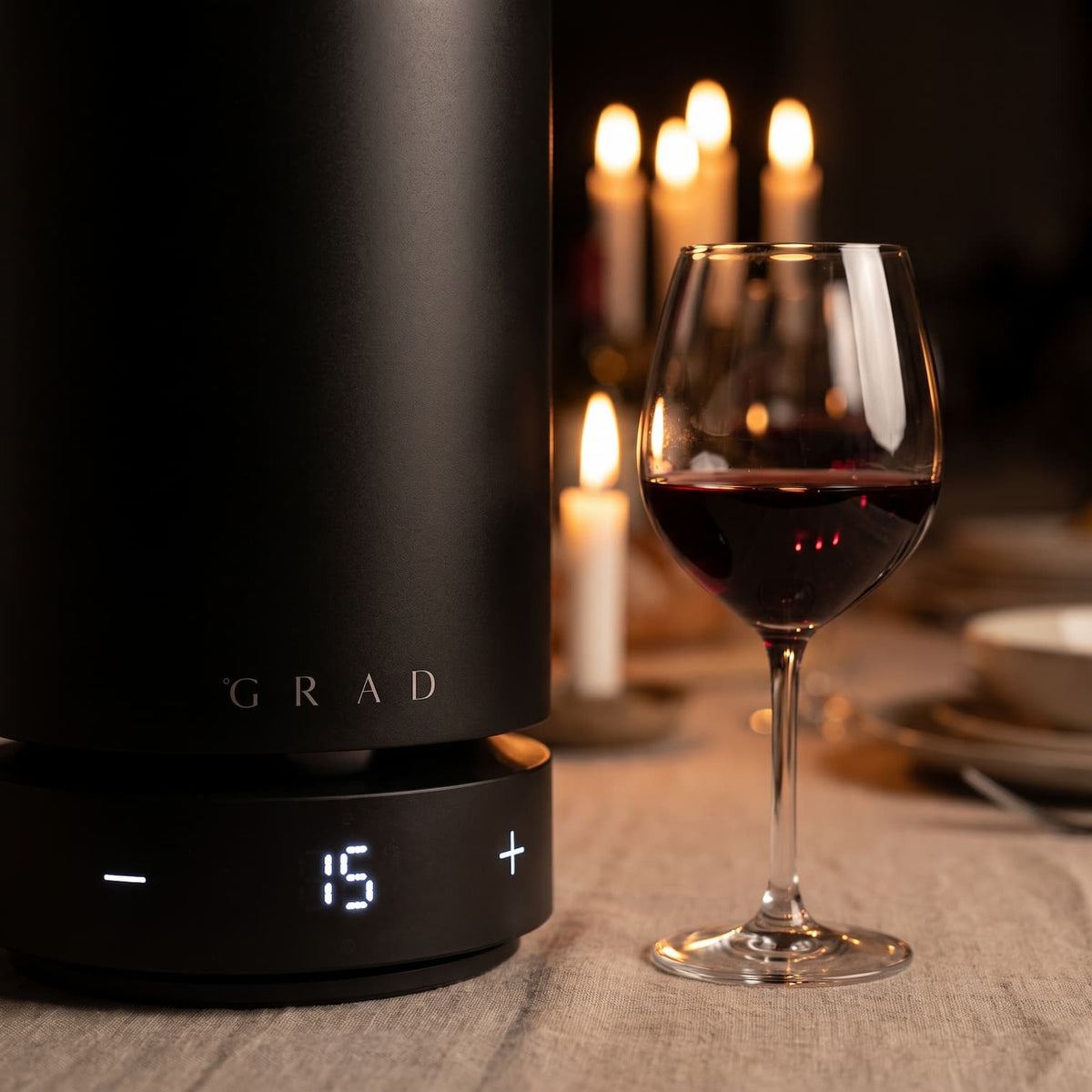
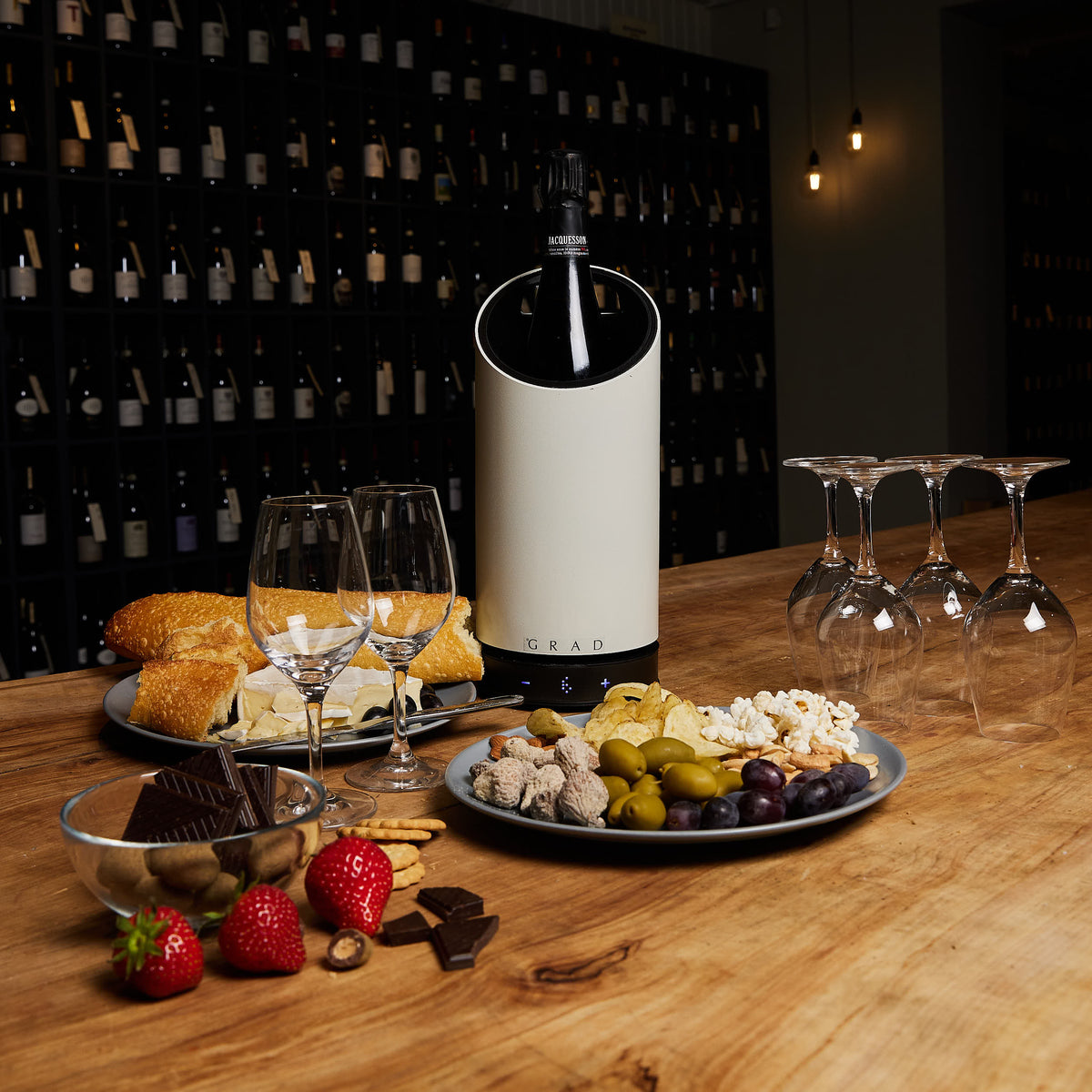
For the bottle itself, the GRAD No.1 holds whatever number you set between 5 and 20 °C, for as long as the bottle is open. Put the wine in already chilled, choose its band from the table above, and it stays there from the first glass to the last.
A last word on taste
The bands are a guide, not a rule. Wines differ, and so do palates. If a wine seems closed or sharp, let it warm a degree or two. If it seems heavy or alcoholic, cool it down. The right temperature is the one where the wine tastes most like itself.