Article: No. 002 · Six Regions Worth Knowing
No. 002 · Six Regions Worth Knowing
A wine list is easier to read once you know a handful of places well. Not the famous names — the useful ones: regions with a recognisable character, a reliable style, and a price that has not yet run away from what is in the bottle.
Six of them below, with the serving band for each. Grape, place, and temperature are one question, not three — a wine only tastes like where it came from if you serve it where it belongs.
1 · CHABLIS, FRANCE · SERVE 7–10 °C
Chardonnay grown on ancient seabed, and it tastes like it: lean, saline, more citrus peel than tropical fruit. Chablis is the region that proves oak is a choice rather than a requirement — most of it never sees a barrel, so what reaches the glass is the grape and the ground. Start at the village level; it will tell you more about the place than a bottle three times the price from somewhere warmer. Serve it cool but not frozen. Below 7 °C the minerality reads as nothing at all.
2 · MOSEL, GERMANY · SERVE 7–10 °C
Riesling on slate so steep the vineyards are worked by hand. The wines are light in alcohol — often under nine per cent — and built on an acidity that carries sweetness without ever tasting sugary. A Kabinett with an hour of food in front of it is one of the most food-friendly things in wine. Read the label for ripeness level rather than for the word dry: Kabinett is the lightest, Spätlese a shade riper and rounder.
3 · RÍAS BAIXAS, SPAIN · SERVE 7–10 °C
Galicia is the green, rainy corner of Spain, and Albariño is its answer to a coastline: stone fruit, a squeeze of citrus, a faint salinity underneath. It has more texture than most crisp whites, which is why it stands up to shellfish rather than disappearing beside it. Drink it young — the last two vintages, as a rule — and keep it in the cooler band, where the acidity stays taut.
4 · BEAUJOLAIS, FRANCE · SERVE 12–14 °C
Gamay spent decades paying for the reputation of one novelty bottling released each November. Ignore that. The ten named crus — Morgon, Fleurie, Moulin-à-Vent among them — make serious, granite-grown red wine with bright red fruit and tannin so fine you barely notice it holding the wine together. This is the region to reach for when Burgundy has become unaffordable, and it wants a genuine chill: cool it for twenty minutes before pouring.
5 · DOURO, PORTUGAL · SERVE 14–16 °C
The terraced valley that gave us port now makes some of Europe’s most complete dry reds from the same indigenous grapes — Touriga Nacional, Tinta Roriz and their neighbours, usually blended. Expect dark fruit, dried herb, and a firm, dusty tannin that rewards a decade if you have the patience. It is a structured red in every sense, so give it the warmest band on the chart — still several degrees below a heated room.
6 · BAROLO, ITALY · SERVE 14–16 °C
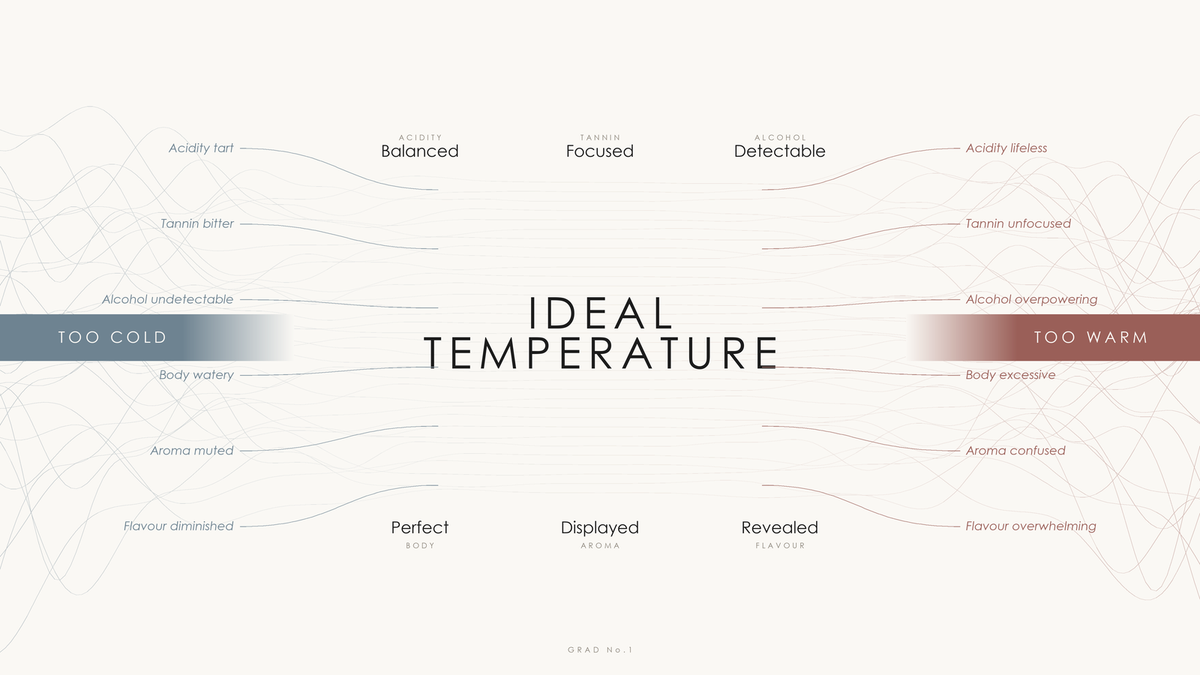
Nebbiolo from the hills of Piedmont: pale in the glass, then anything but on the palate — rose, tar, sour cherry, and a tannin that arrives late and stays. Barolo is the clearest argument for serving temperature there is. Too cold and the tannin clamps shut and the wine tastes austere; at 14–16 °C it unfolds in layers over the course of an evening. If you buy one bottle from this list to keep, make it this one.
WHERE TO START
If you take one region from this letter, take Beaujolais — it is the most forgiving, the least expensive, and the one most often served wrong. A cru Beaujolais poured at room temperature tastes flat and jammy; the same bottle at 13 °C tastes like a different wine altogether.
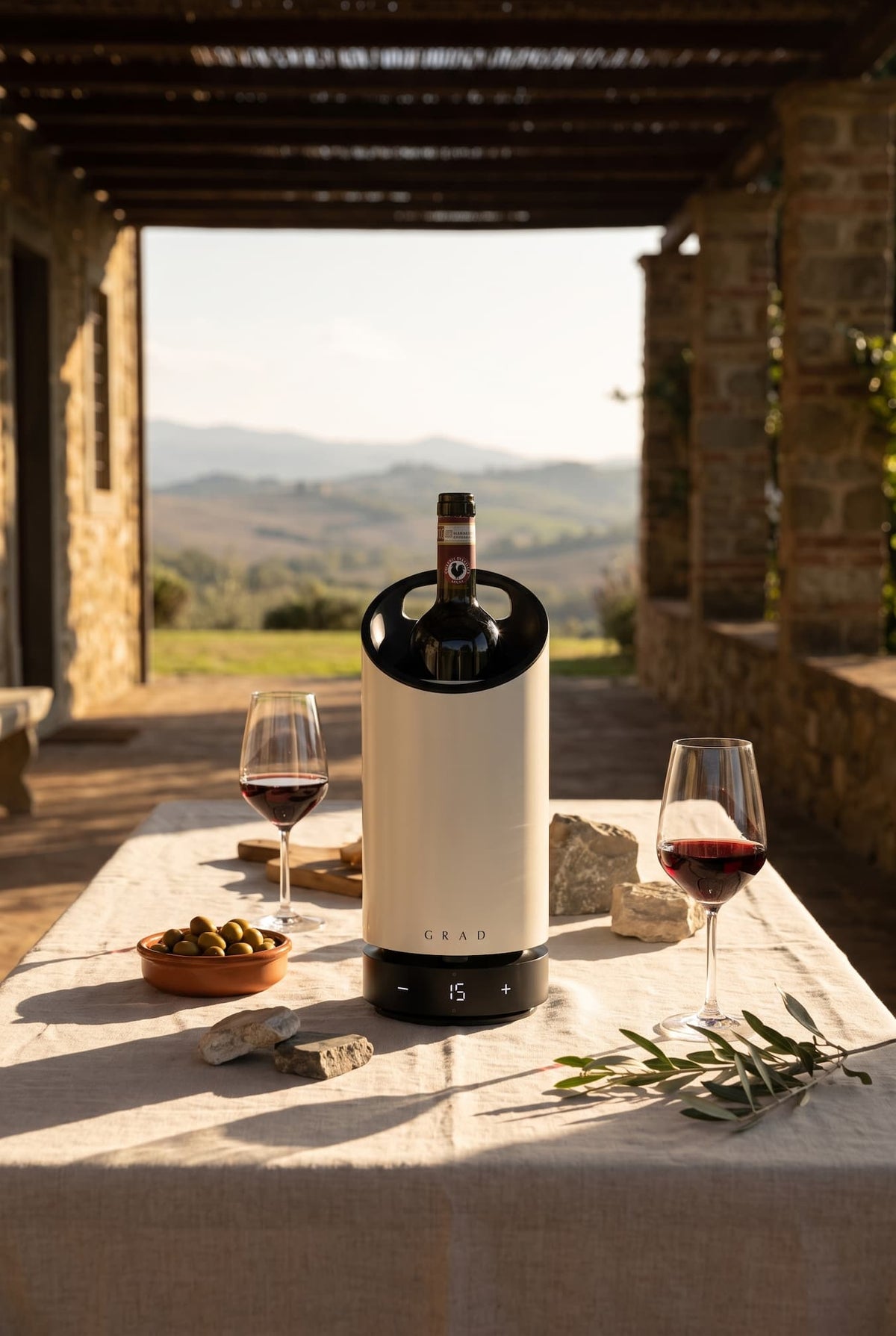
That is the thread running through all six: place sets the character, temperature decides whether you get to taste it. A cellar does the job, a bucket does it briefly, and a GRAD No.1 holds the number you set until the bottle is empty.
Until next time,
Max
The GRAD Journal is a short letter on serving wine well. It arrives by email first; sign up at the foot of any page to receive the next issue.