Article: No. 001 · The Ideal Temperature
No. 001 · The Ideal Temperature
Welcome to the first edition of the GRAD Journal — a short letter on serving wine well. No offers, no noise; just the things we find worth knowing.
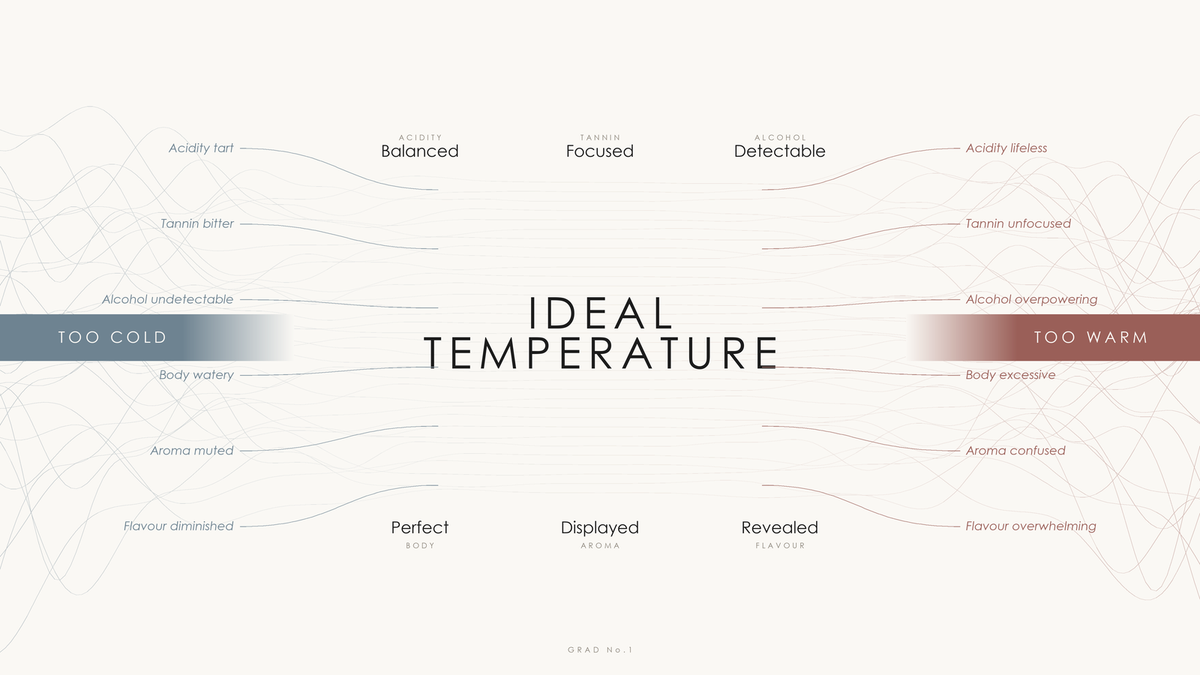
We are starting with the variable that changes a wine more than any other, and the one most of us never control: temperature. Too cold, and the aroma goes quiet, the body turns watery, the flavour diminishes. Too warm, and the alcohol steps in front of everything the winemaker actually intended. In between sits a narrow band — different for every style — where acidity balances, tannin focuses, and the wine simply shows what it was made to show.
Here is what happens inside that band, style by style.
CHAMPAGNE & SPARKLING · 6–10 °C
Cold is what keeps the mousse fine. At 6–10 °C the carbon dioxide stays dissolved longer, so the bubbles arrive small and persistent rather than loud and brief, and the crisp acidity reads as freshness instead of sharpness. Serve a vintage champagne toward the top of the band — a degree or two of warmth lets the brioche and orchard-fruit notes through that ice-bucket cold would mute entirely.
CRISP WHITE · 7–10 °C
Sauvignon Blanc, Albariño, Muscadet. These wines are built on acidity and aromatics, and this band protects both: cool enough that the acid stays taut and the wine feels alive, warm enough that citrus and green notes still lift out of the glass. Below 7 °C the aroma closes and you are drinking texture; much above 10 the freshness slackens.
ROSÉ · 8–12 °C
Rosé is often served far too cold, straight from a bucket — which is how a good Provence rosé ends up tasting of nothing at all. At 8–12 °C the red-berry fruit and the faint phenolic grip that separates rosé from white both come forward, while the wine keeps the chill that makes it what it is: a summer wine with a spine.
FULLER WHITE · 10–13 °C
Oaked Chardonnay, Viognier, white Rhône blends. These are wines of body and breadth, and body needs a little warmth to unfold. At 10–13 °C the texture turns from watery to weighty, oak and stone fruit integrate, and the lower acidity reads as roundness rather than flatness. This is the band most fridges overshoot on the cold side — give the bottle fifteen minutes, or set the number.
LIGHT RED · 12–14 °C
Pinot Noir, Gamay, young Cabernet Franc. The old advice of “room temperature” predates central heating; a light red at 20 °C is mostly alcohol and jam. At 12–14 °C — genuinely cool — the delicate red fruit stays precise, the gentle tannin stays silky, and the wine keeps the energy that makes these grapes worth loving. If a light red ever seems dull, try it cooler before you blame the bottle.
STRUCTURED RED · 14–16 °C
Barolo, Bordeaux, Rioja, Syrah. Tannin is the reason for the warmest band on the chart: served too cold it clamps down bitter and hard, and the wine feels austere. At 14–16 °C the tannin focuses instead of bites, dark fruit and spice open in layers, and the alcohol stays where it belongs — carrying the wine, not leading it. This is still several degrees below a modern living room.
TWO THINGS WORTH KNOWING
First, wine in a glass warms by roughly a degree every few minutes at room temperature, so “right out of the fridge” rarely lasts past the first pour — which is why the bands above are targets to hold, not just to hit. Second, an ice bucket drives a bottle towards 0 °C and keeps going; it has no idea what you are drinking.
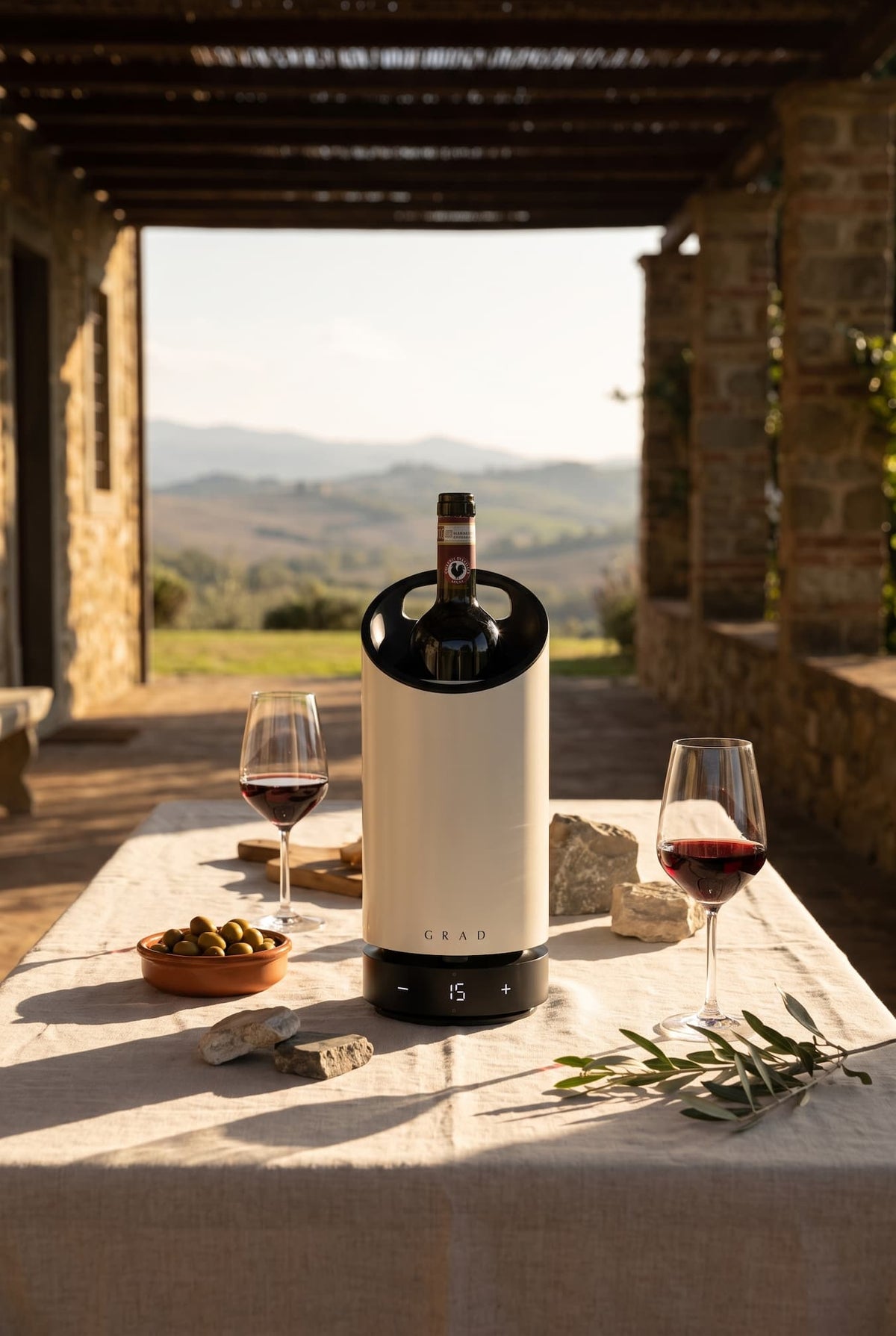
However you hold the temperature — a cellar, a bucket watched closely, or a GRAD No.1 set to the number — the wine will thank you for it.
Until next time,
Max
The GRAD Journal is a short letter on serving wine well. It arrives by email first; sign up at the foot of any page to receive the next issue.